![How Joyful Patterns Spark Social Vibrancy [Boston]](https://images.squarespace-cdn.com/content/v1/5b63c07485ede1aa9c4b6ced/1772694507930-6VW6OMCZ0V4V0LHSQ1DW/Joyful+Urbanist_Lightwelll+Watercolor_Hi+Res.jpg)
How Joyful Patterns Spark Social Vibrancy [Boston]
Recently, I was walking with a friend after dinner and stopped to smell a flower and run my hand along a building moulding. He noticed and asked if it met my standards. This question made me laugh and took us both down a rabbit hole.
In Why Kind, Beautiful Buildings Spark Joy and Happiness, I mentioned why I often choose walking over other modes of transportation (bike/transit/car). Walking brings me ordinary moments of joy because it allows me to notice the patterns that make walkable places delightful.
When I was studying in Rome, our class went to the Archbasilica of Saint John Lateran. One of the key contributing architects was Francesco Borromini, a brilliant and notoriously obsessive designer. Borromini was devoted to detail, geometry, and mathematical precision to a degree that was often destructive to himself and his work. Trained as a stonemason, he would personally guide stone cutting on site to ensure the masons executed his complex geometries exactly as intended. If something didn’t meet his standard, he would tear it down and rebuild it. And yet, if you touch a moulding carved under Borromini’s direction in that church, no other moulding feels quite as wonderful. At least, I have yet to find one.
When I think about Borromini's struggles with perfectionism, my mind goes to a conversation with Dan Parolek and Kevin Kinkenberg about the late Léon Krier. I didn't know him personally, but I wish I did. I smile hearing stories of how he approached ideas with curiosity and a willingness to tinker. He didn't take himself too seriously and was simply trying to figure something out. At the same time, he had the ability and discipline to convey very complex ideas about urbanism into a simple diagram. As a recovering perfectionist, I go through methodical processes to eliminate the need for something to be perfect: hammering a board to make it feel destructed before staining, splattering paintings with confetti to introduce imperfection, drawing in pen to eliminate the urge to erase, layering washes knowing that if one doesn't go well the color will settle differently next time, creating a site analysis to understand the lovable opportunities and constraints of each site and build from there, hearing the public react to drawings and immediately pivot, etc.
I say all of this because the places and the people around us are inspirational. When we talk about the loneliness epidemic in this country, it's helpful to understand the research and observe the silos we have created for ourselves when departing from walkable patterns. To take it one step further, I would argue that we need to understand how to emulate cherished patterns to move the needle and design for human beings as social animals. We should incorporate patterns that allow for degrees of connection, such as promenades, courtyards, porches, stoops, dooryards, street cafes, lightwells, etc.
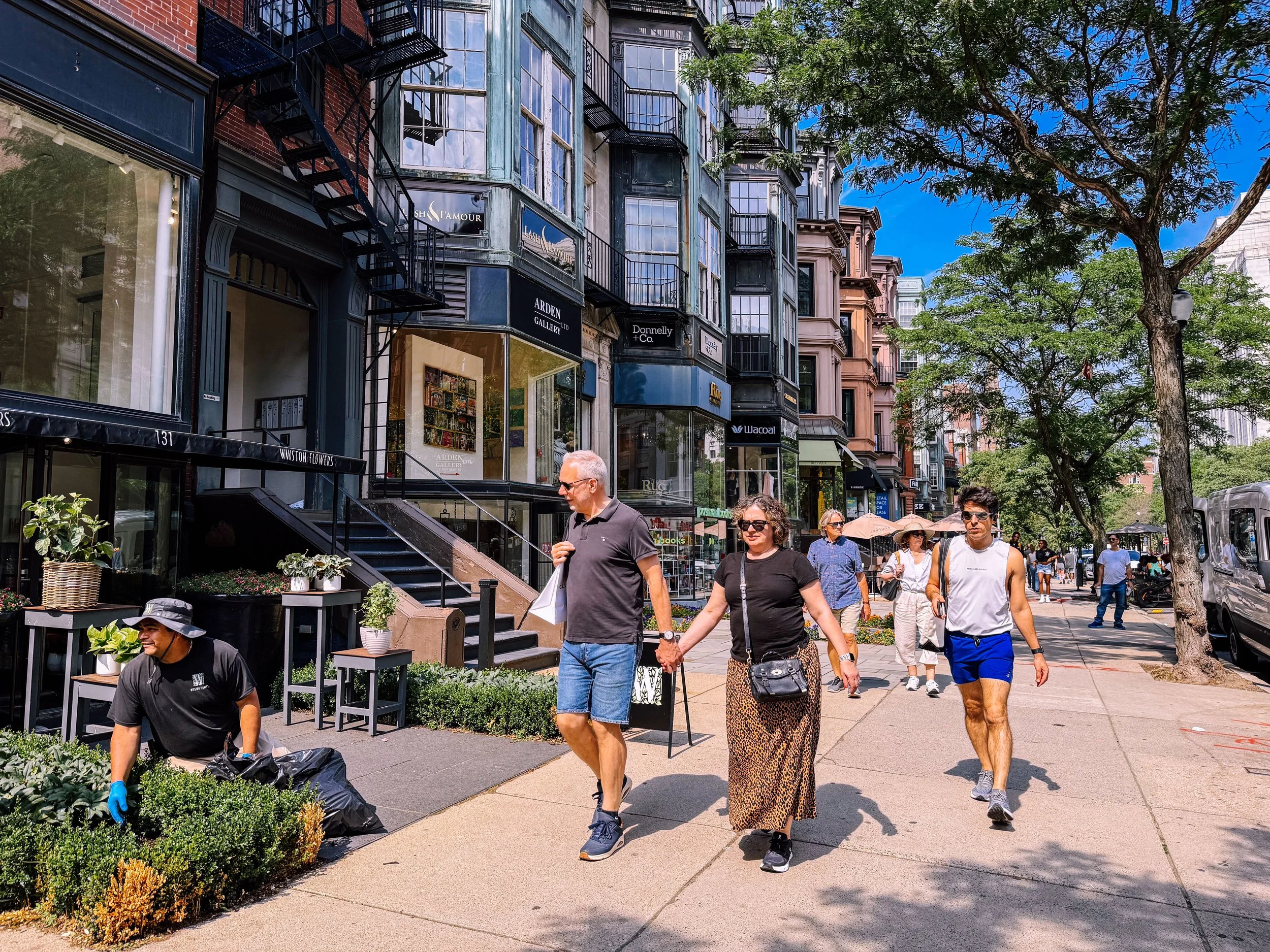
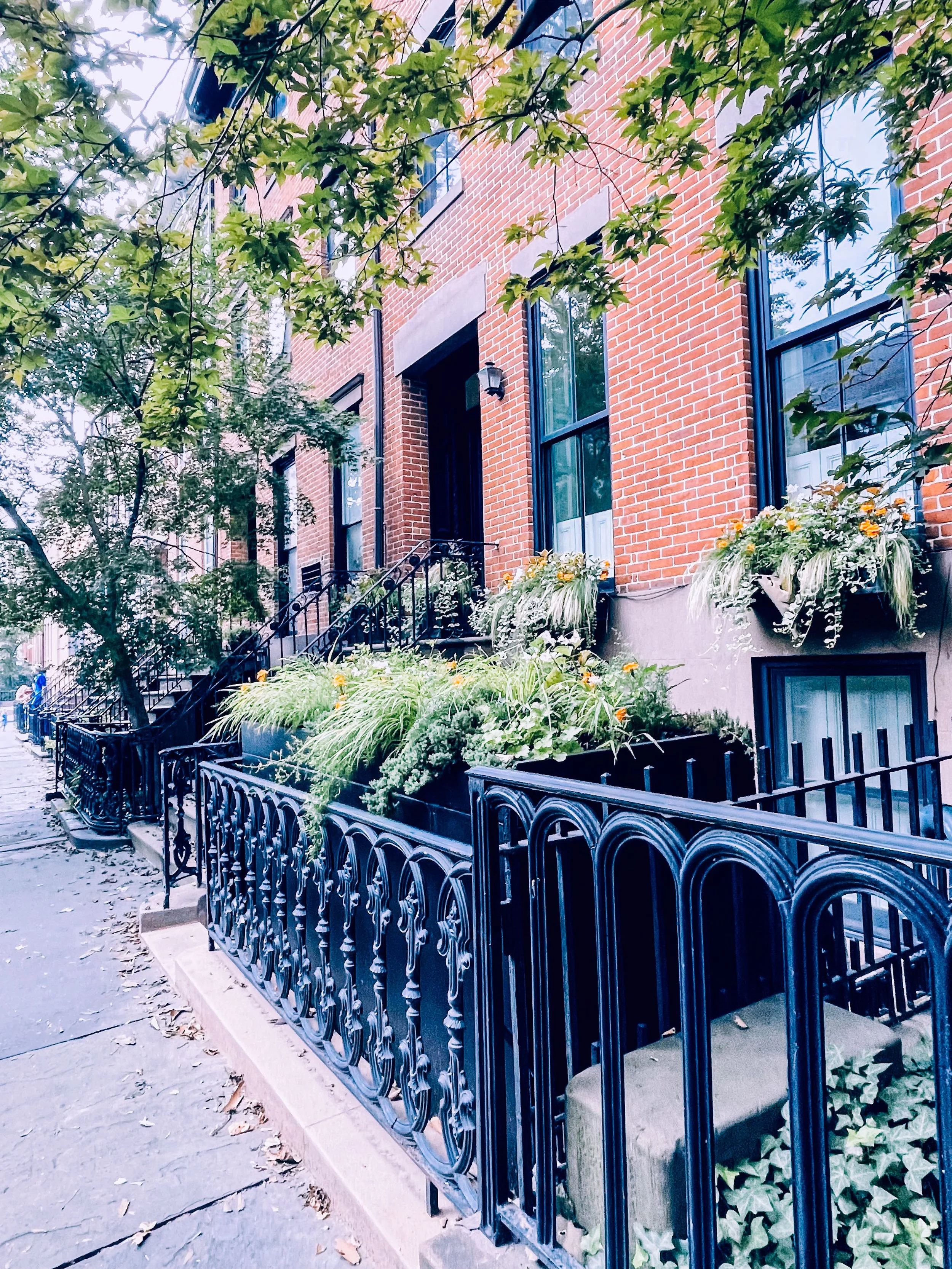
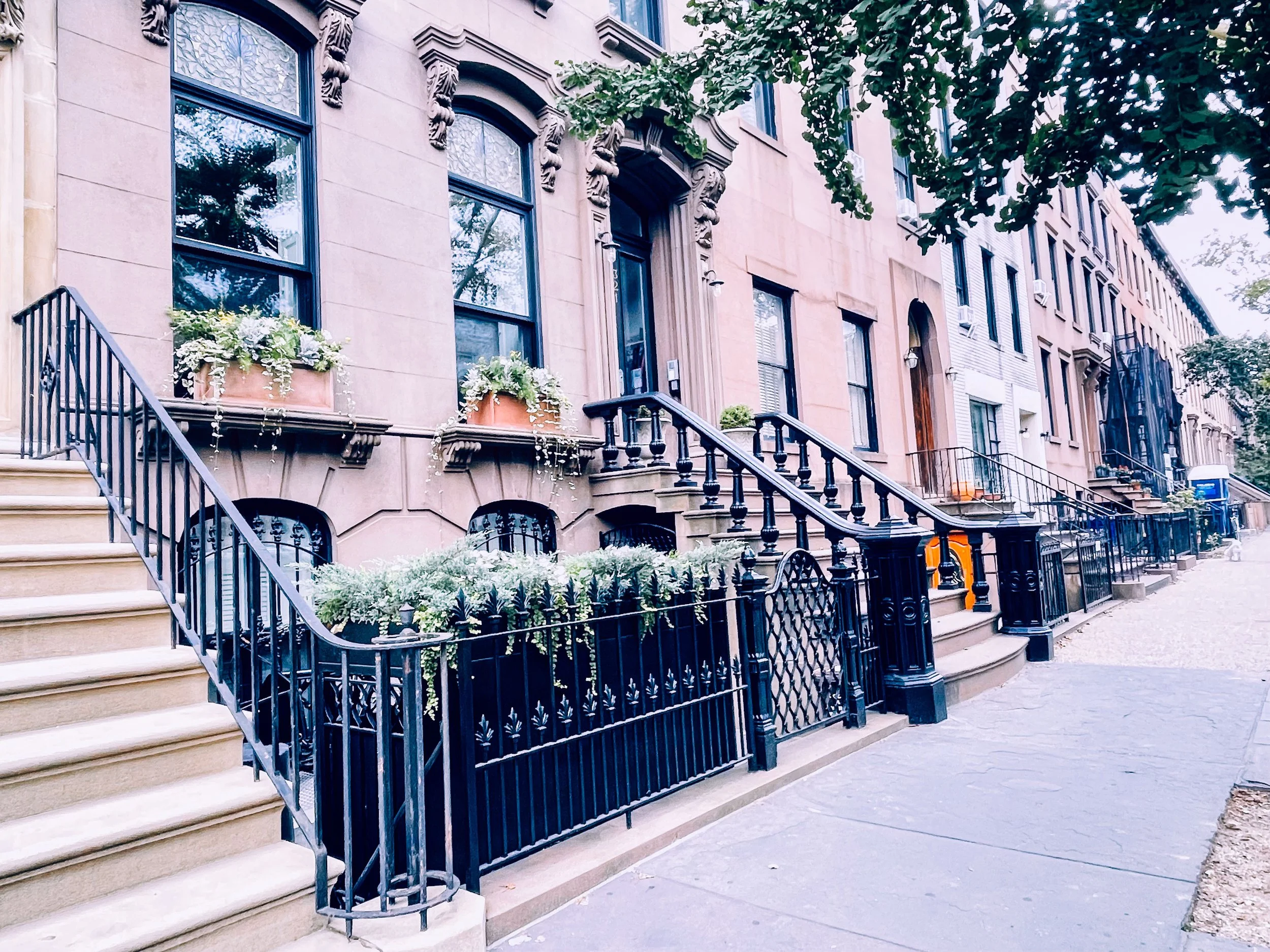
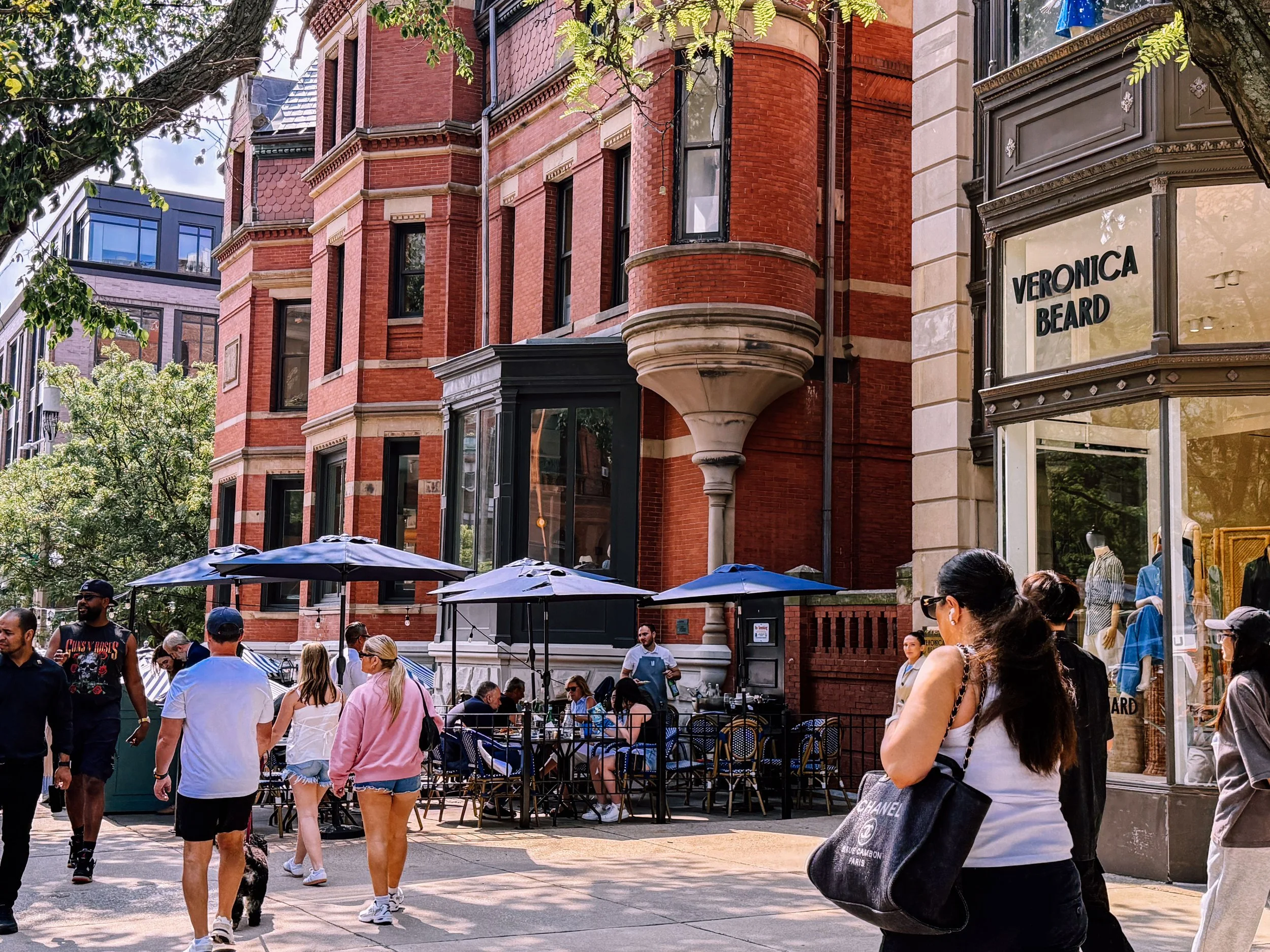
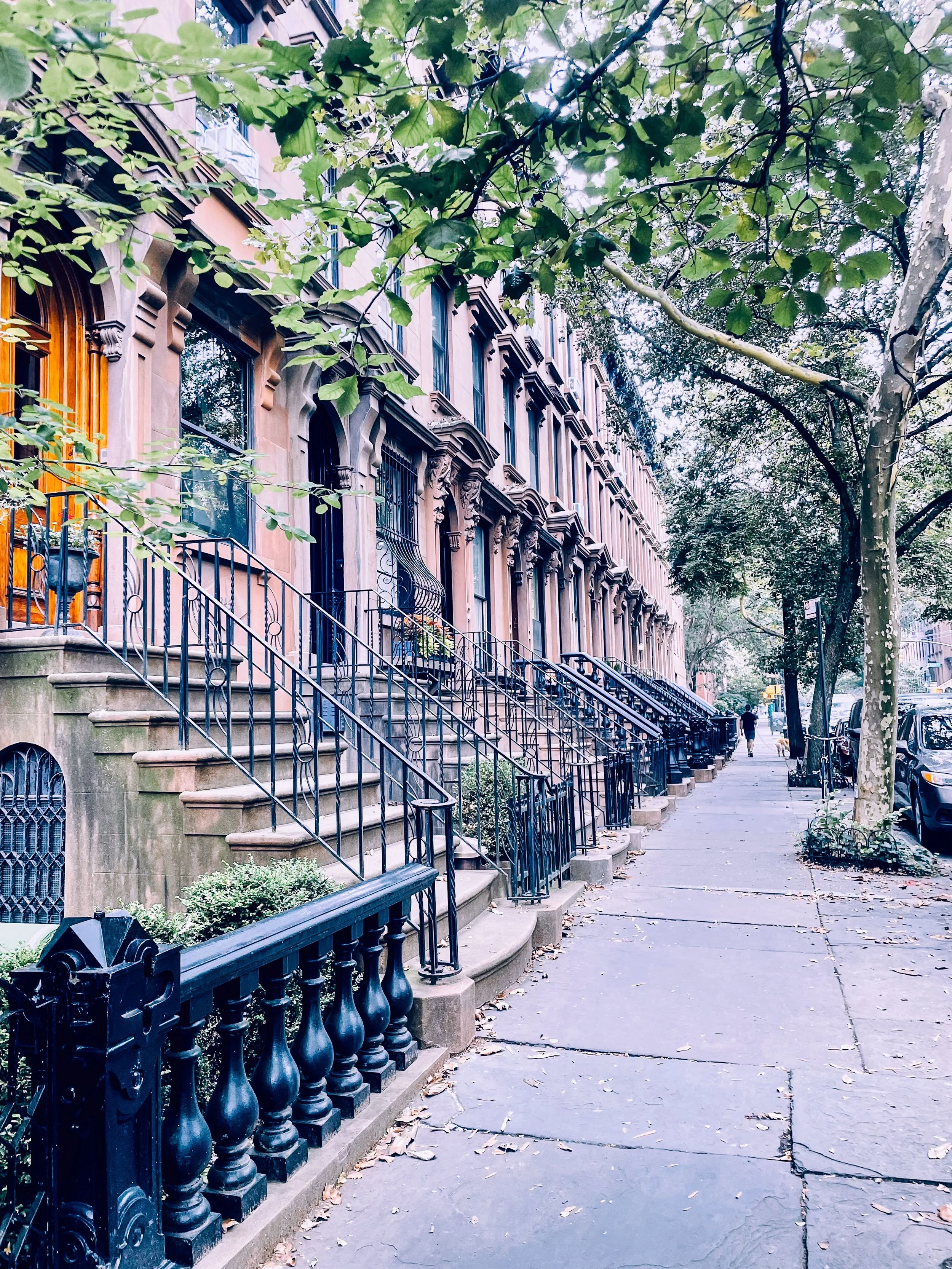
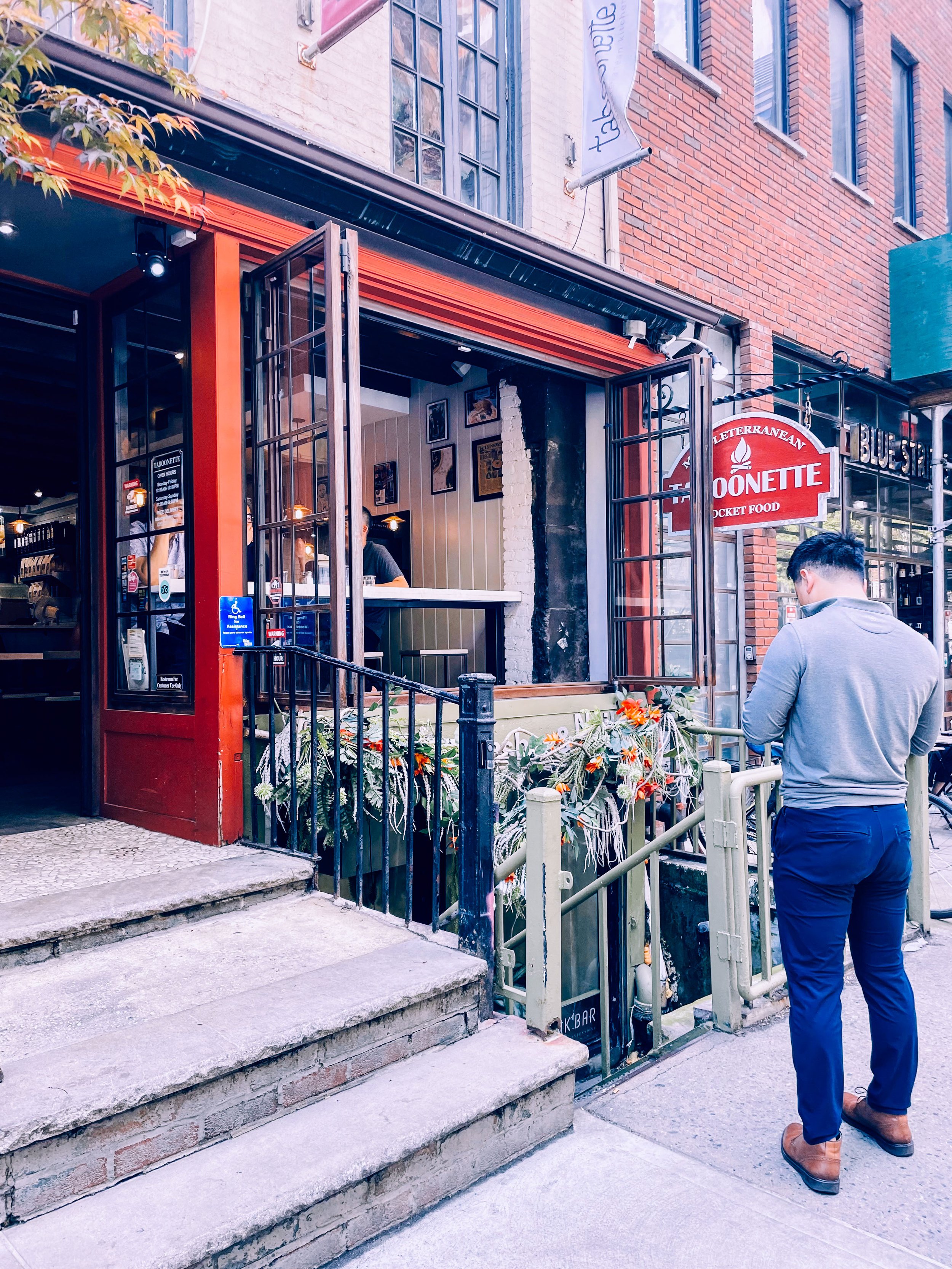
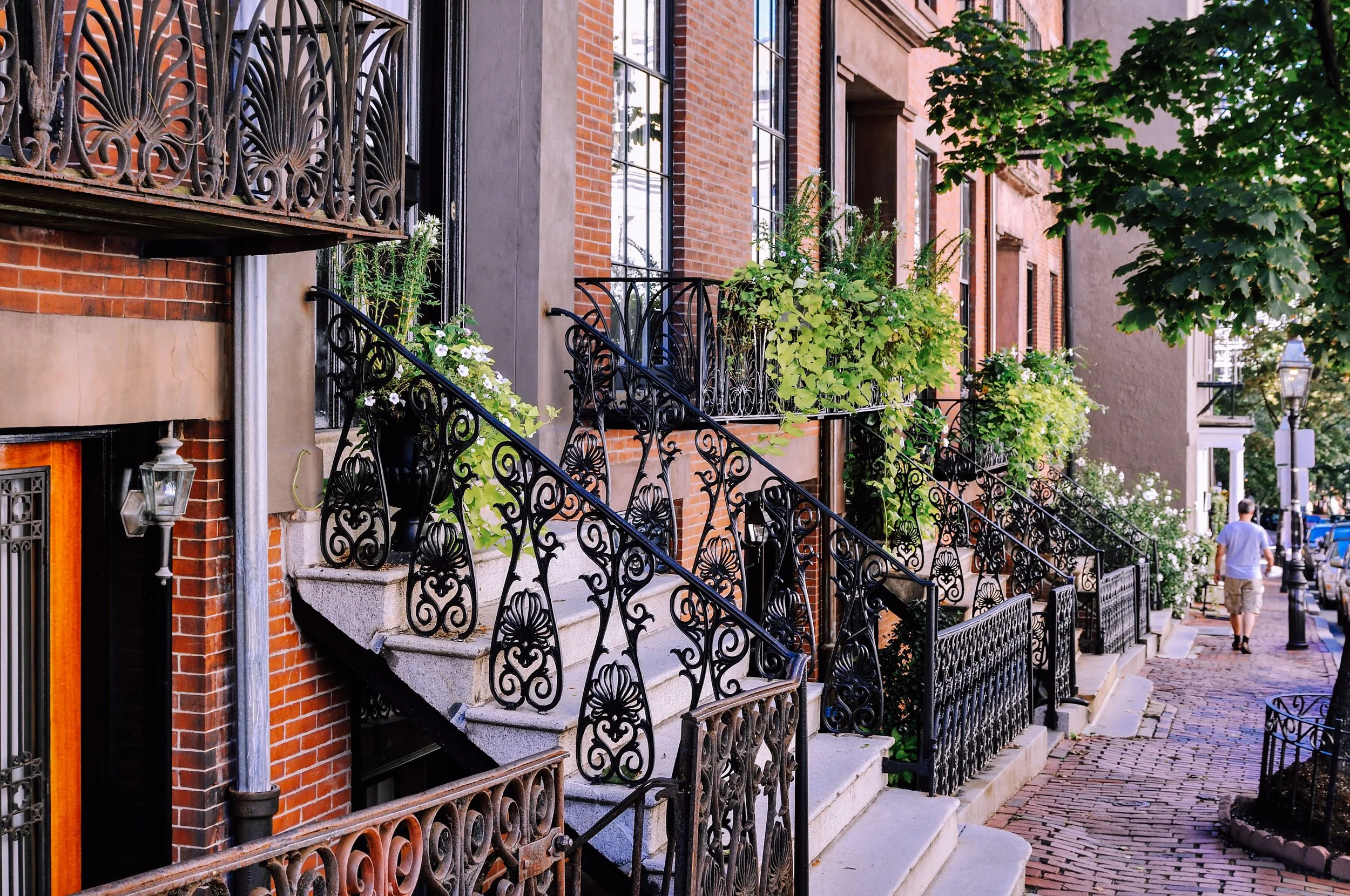
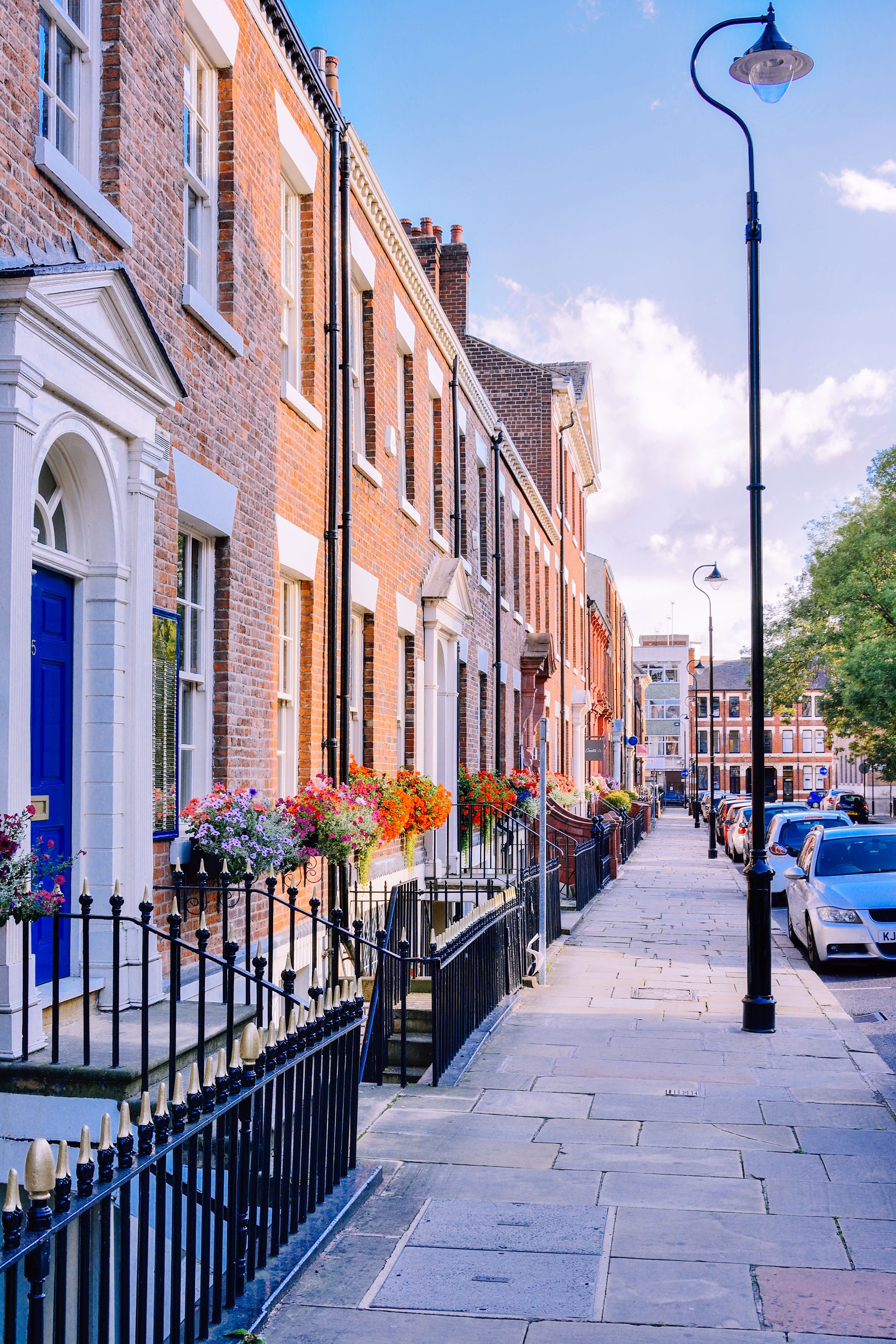
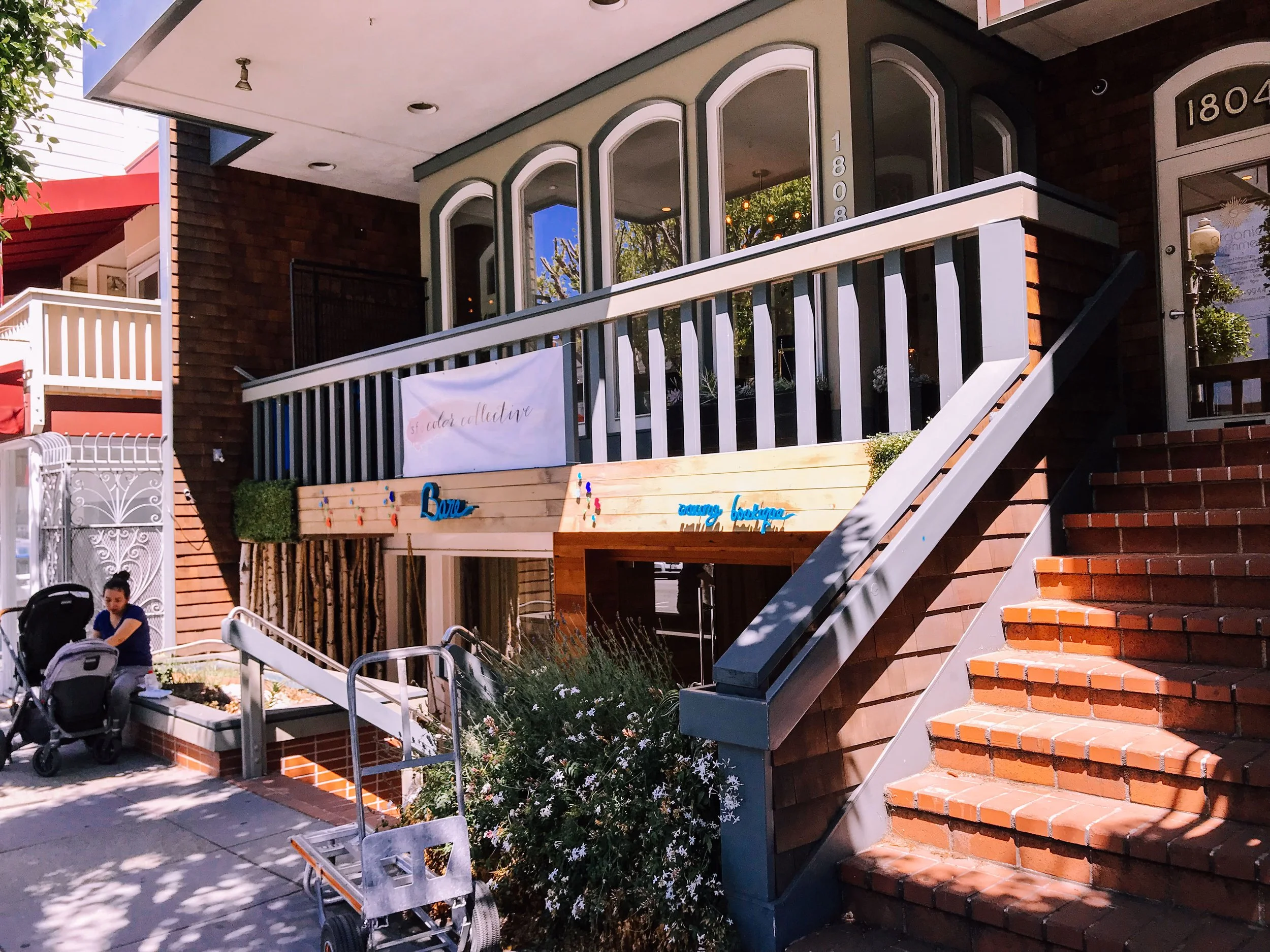
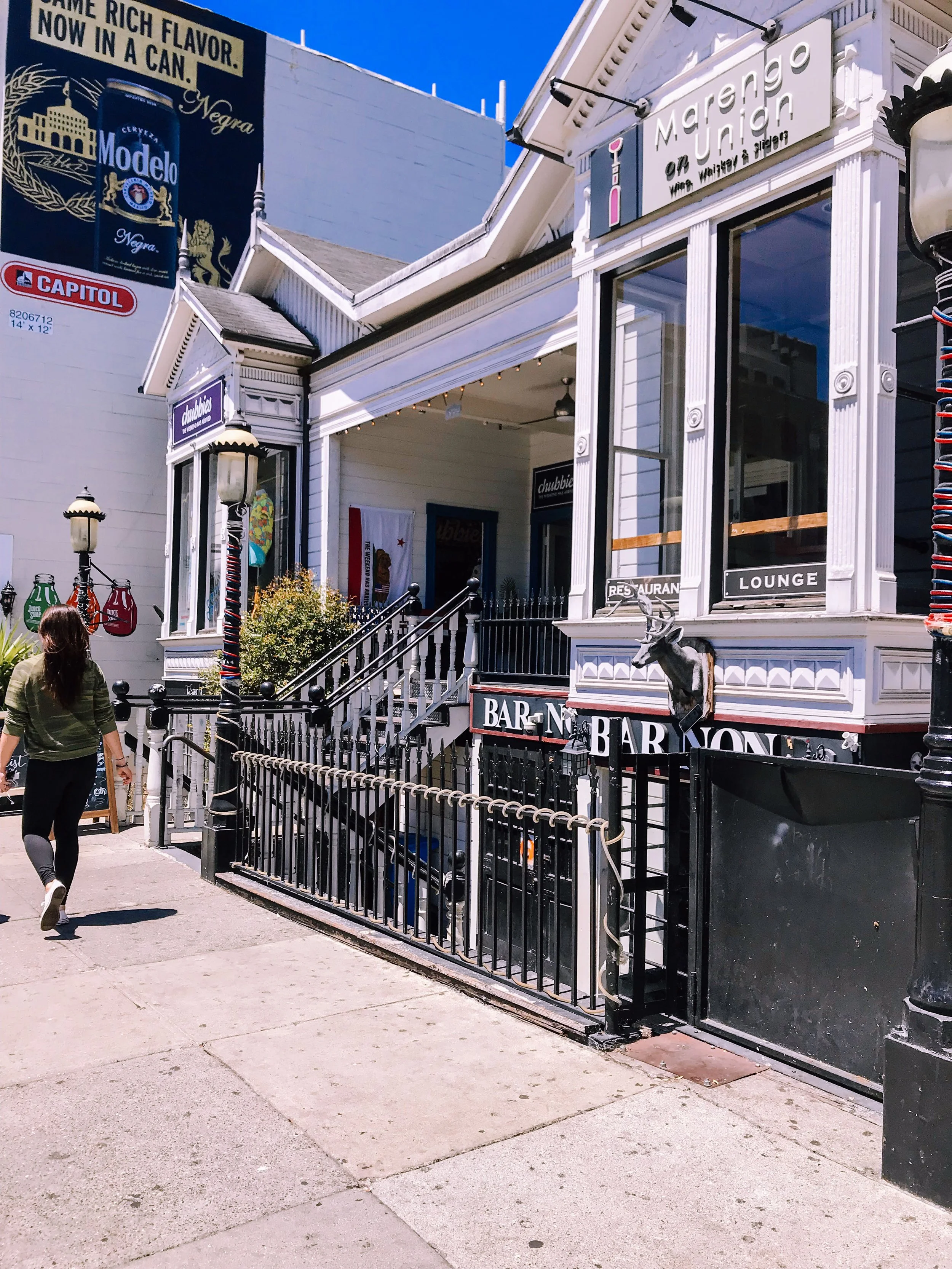
Lightwells were originally introduced in Georgian and later Victorian architecture in cities like London and Edinburgh. They served two key purposes: to provide daylight, ventilation, and access to basement levels; and to create separation between the public realm and semi-public, subterranean spaces. They were brought over the Atlantic to cities like Boston, New York, and Philadelphia, and were often paired with rowhouses and later brownstones. Over time, this pattern evolved into outdoor seating areas, landscaped garden spaces, micro-retail entrances, etc. Every time I see a lightwell, I am always delightfully surprised and drawn to the space. Following the stairs down off the sidewalk allows you to see and feel details from different perspectives. Once down in the sunken cafe, you notice the louder sounds around you while also observing the low perimeter fence at sidewalk level and the vibrant blue striped umbrellas popping up and defining the space. On the days when you are struggling and can't find the energy to talk, the sunken cafe offers the opportunity to soak in the social vibrancy of the people around you. You can choose how much you want to engage with those around you. You can feel the sun's rays filtered through the street trees and witness the street life dancing from above. Other times, you may need the creative energy the cafe offers, but you want to remain in a flow state. You can choose to sit inside the cafe and next to the window opening out to the sunken terrace. After lunch, you walk down the street and recognize a friend's laugh. You stop and hear about a hardship that she is going through, and you get hit with happy brain chemicals knowing that she chose you to sit in her darkness, and you could do so without losing yourself. Self-awareness is a journey and a practice. Really sitting with yourself and understanding the feelings that arise in such a place is incredibly powerful. It helps us to train our minds to focus on the things that we find beautiful, harmonious, and balanced so that we can remember those moments over and over again.
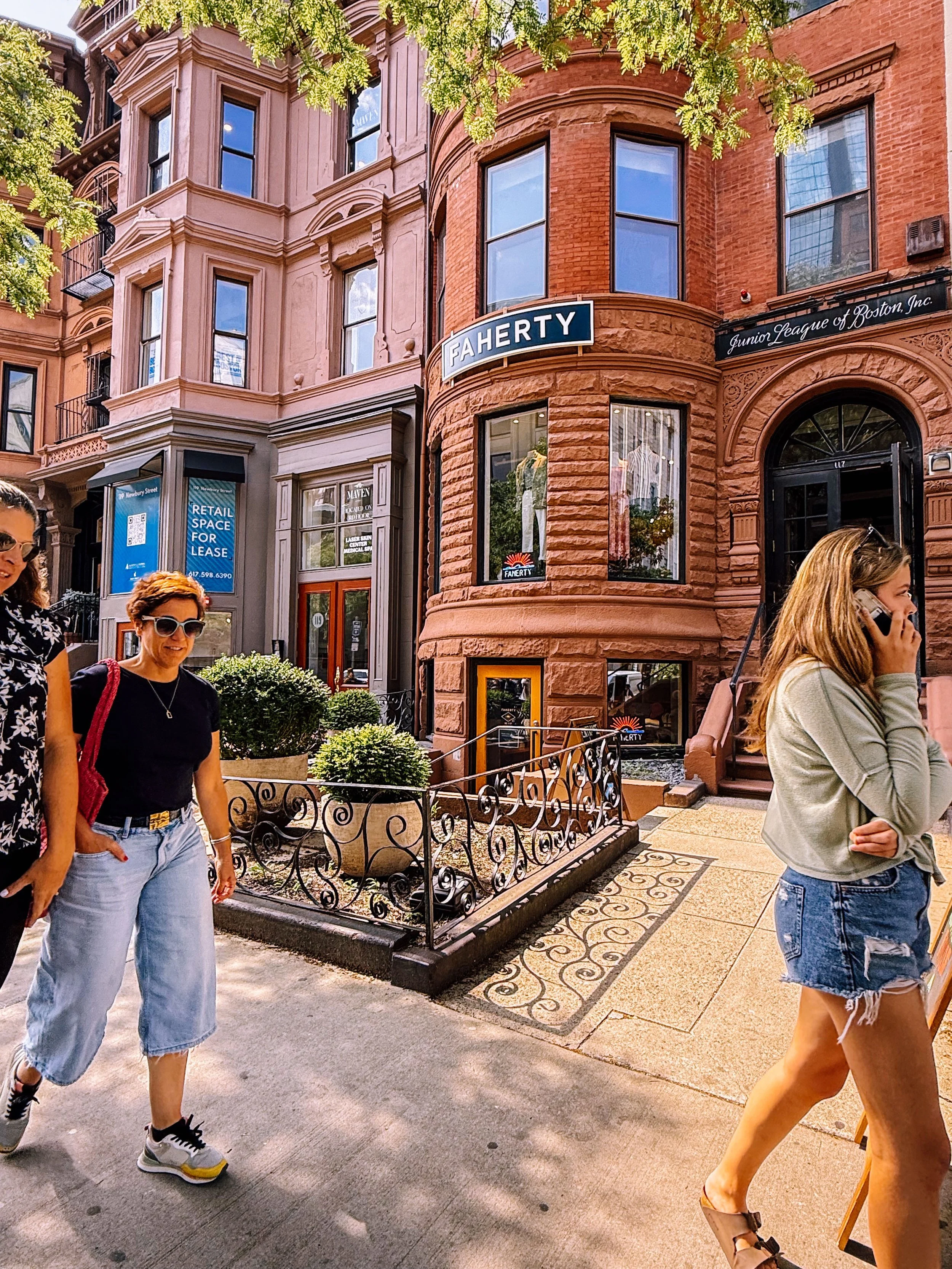
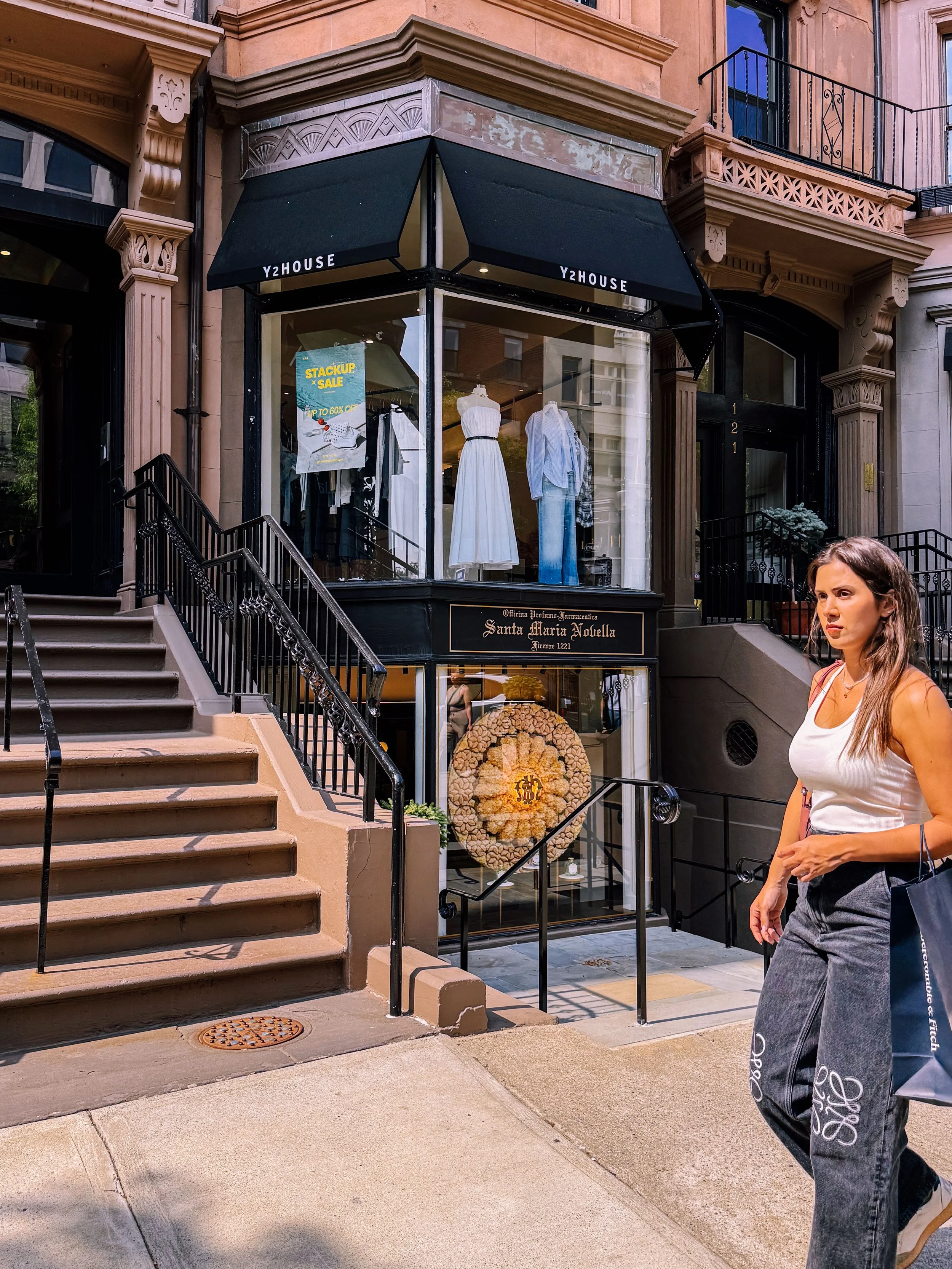
Let's return to the Archbasilica of Saint John Lateran in Rome. Francesco Borromini contributed to this building from 1646 to 1650. He is responsible for remodeling the nave through a Baroque reinterpretation while following a papal mandate to preserve elements of the ancient Constantinian structure. Over nearly 1,700 years, other brilliant minds and skilled hands continued shaping the church we see today. Creativity rarely appears fully formed. More often, our inspiration begins with curiosity and the willingness to go deeper when we find something interesting. Curiosity, active listening, and innovation are nurtured by people, buildings, and environments that help us feel safe and comfortable. We are social animals, and we gravitate to environments that enable the ability for connection, discourse, and expression. The things that breathe life into our souls. Or, in the words of Christopher Alexander, we gravitate to places that present us with "the quality without a name."

![Why Harmony Embraces Imperfection [Rome]](https://images.squarespace-cdn.com/content/v1/5b63c07485ede1aa9c4b6ced/1740746476852-N860MJ7BE83HD4EVS0VS/Joyful+Urbanist+Spanish+Steps_Watercolor.jpg)